
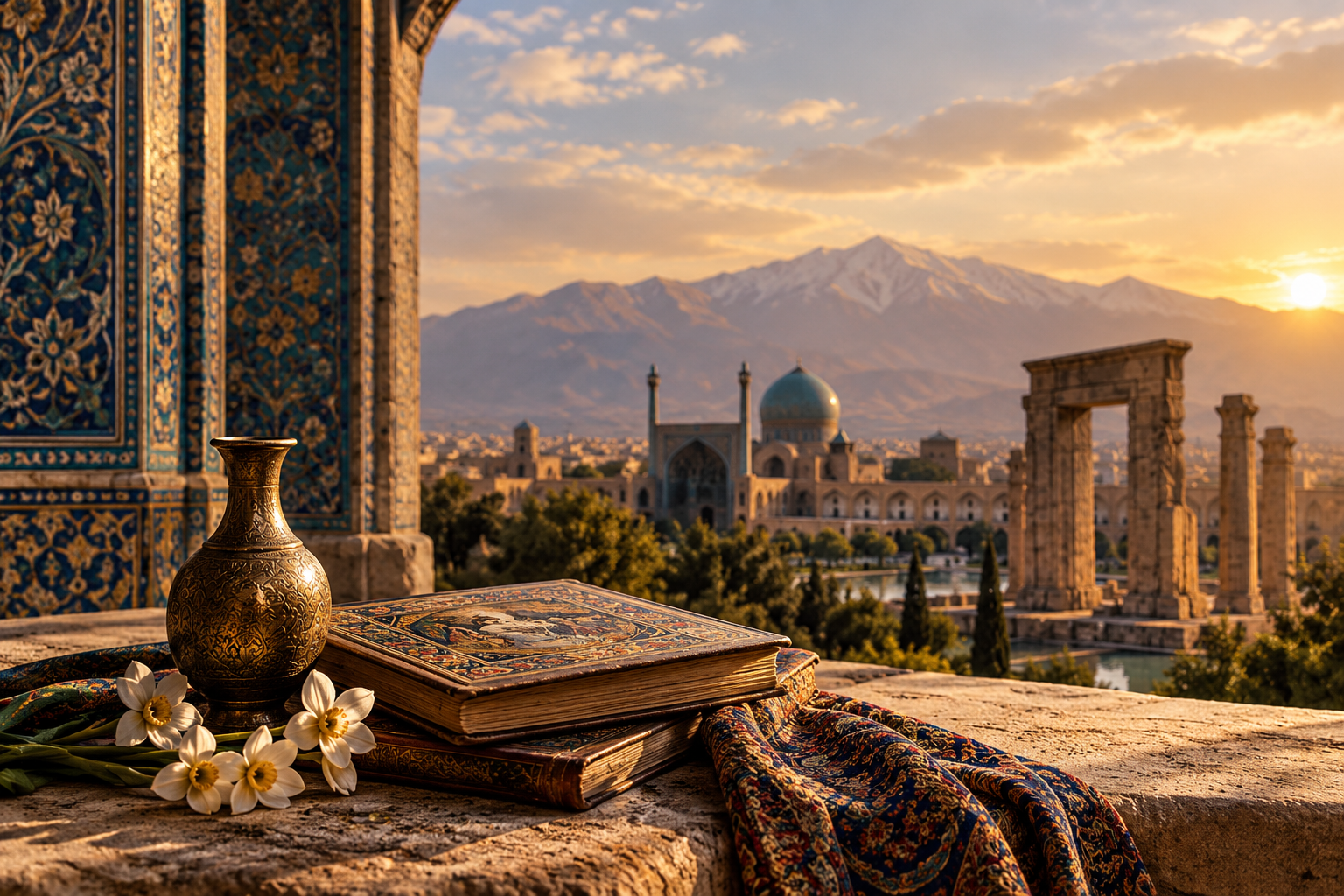
We live in a world shaped by rapid innovation, constant movement, and an ever-expanding exchange of ideas. New technologies transform how we work and communicate, while cultures meet across borders in ways that were once unimaginable. In the middle of this change, an important question remains: what helps us stay connected to who we are?
Cultural heritage offers one answer. It is not simply a collection of old objects, monuments, customs, or stories. It is a living conversation between generations—a way of carrying knowledge, imagination, values, and experience into the present while leaving room for new meaning.
Heritage Is More Than the Past
When we hear the word heritage, we may picture historic buildings, traditional crafts, ancient manuscripts, music, or family rituals. These visible expressions matter, but heritage also includes the ideas and ways of seeing the world that give them meaning.
A pattern repeated by an artisan can hold generations of observation. A poem can preserve a question about love, justice, or the human spirit. A meal shared at a family table can express hospitality and belonging without the need for explanation. In each case, culture is not frozen in time; it continues through the people who practise, interpret, and share it.
Identity Without Isolation
Knowing our cultural roots does not require us to turn away from the wider world. On the contrary, a deeper understanding of our own traditions can make us more curious about the experiences of others. When identity is approached with openness rather than superiority, cultural difference becomes an invitation to learn.
Every culture offers its own ways of exploring universal human concerns: how to live well, how to face uncertainty, how to express beauty, how to honour others, and how to find meaning. These perspectives are not identical, and they do not need to be. Their value often lies in the different questions they encourage us to ask.
Tradition as a Source of Creativity
Tradition and innovation are sometimes treated as opposites. Yet many meaningful innovations begin with a close study of what came before. Artists learn from established forms before transforming them. Designers reinterpret historic motifs for contemporary spaces. Writers and thinkers revisit old texts to discover insights that speak to present-day life.
This is especially clear in the meeting of heritage and craftsmanship. A handmade object can preserve a technique while reflecting the choices of the person who creates it today. Its value may lie not only in its function or appearance, but also in the human knowledge, patience, and imagination it carries.
Respecting heritage, then, does not mean repeating the past without question. It means understanding what deserves to be carried forward—and having the creativity to let it speak to a new generation.
Keeping Cultural Knowledge Alive
Cultural heritage survives when it is experienced, discussed, taught, and shared. Families pass on stories; craftspeople teach their skills; researchers preserve knowledge; artists create new interpretations; and readers discover voices that might otherwise remain unfamiliar to them.
Small choices can also make a difference. We can ask elders about the stories behind family traditions, learn the meaning of a motif, read literature beyond our usual cultural frame, visit a historic place with curiosity, or support makers whose work sustains traditional skills. These acts turn heritage from an abstract idea into a lived relationship.
Sharing cultural knowledge responsibly matters, too. No single object, story, or artwork can represent an entire people. Context, accurate attribution, and respect for the communities behind a tradition help ensure that cultural exchange becomes understanding rather than simplification.
A Living Legacy for the Future
The future does not ask us to choose between progress and memory. It asks us to decide how the wisdom of experience can contribute to what comes next. Cultural heritage can give us perspective in times of change, inspire creative work, strengthen a sense of belonging, and open pathways to dialogue across generations and borders.
At its best, heritage is neither a distant monument nor a decorative reference. It is a source of meaning that remains active because people continue to care for it, question it, reinterpret it, and share it.
To carry a heritage forward is not merely to remember where we came from. It is to make thoughtful choices about what we bring into the future.
At Gold & Luxe, we see cultural heritage as an invitation to discover the stories, artistry, and ideas that connect people across time and place. By exploring these connections, we can honour the richness of individual traditions while making space for a more curious and understanding world.