
Love is often described as an emotion: something we feel, discover, or share with another person. Yet across the great contemplative traditions, love has also been understood as a force of transformation—a quiet alchemy capable of changing the way we see, endure, understand, and become.
In this deeper sense, love is not simply an addition to life. It changes the quality of life itself. It can turn attention away from the narrow demands of the ego and toward a wider awareness of connection. It can soften what has become rigid, illuminate what has remained hidden, and invite us to meet ourselves and others with greater honesty.
Love Is More Than a Feeling
Feelings can rise and fall. They are shaped by circumstance, memory, expectation, and time. The transformative power of love begins when it moves beyond passing emotion and becomes a way of relating to the world.
To love deeply is to pay attention. It is to recognize another person as more than a reflection of our own needs. It is to listen without immediately preparing a reply, to act with care when convenience suggests otherwise, and to remain open to truth even when truth asks us to change.
This does not mean that love requires the loss of boundaries or the denial of one’s own dignity. Genuine love is not self-erasure. It asks for courage as much as tenderness: the courage to be sincere, to take responsibility, and to respect the freedom and humanity of another.
The Inner Alchemy of Transformation
Alchemy offers a powerful metaphor for the inner work of love. In its symbolic language, transformation is not merely the replacement of one substance with another; it is the discovery of a more refined possibility within what already exists.
Love can work in a similar way. It does not make every difficulty disappear, nor does it turn pain into something desirable. Instead, it can change our relationship with difficulty. Resentment may give way to understanding. Fear may become a reason to cultivate courage. Disappointment may reveal an expectation that needs to be questioned. Even grief, when met with patience and support, can deepen our capacity for compassion.
The process is rarely instant. Inner transformation happens through choices repeated over time: choosing honesty over performance, curiosity over judgment, generosity over indifference, and reflection over reaction. Love becomes an alchemy not because it magically solves life, but because it invites us to participate consciously in our own becoming.
Rumi and the Wisdom of Love
In the Persian literary and mystical imagination, love is often portrayed as a path that carries the seeker beyond the limits of the familiar self. The poetry associated with Jalal al-Din Rumi returns again and again to longing, awakening, surrender, and the possibility of seeing existence with a transformed heart.
For Rumi, love is not simply possession or romantic attachment. It is a movement toward a wider truth. Longing can become a doorway: it reveals that the heart is capable of seeking something beyond comfort, status, and certainty. The beloved, in this spiritual landscape, can become a mirror through which the seeker discovers the depth of their own inner life.
This perspective does not ask us to abandon the world. It asks us to see it differently. A conversation, a moment of kindness, the beauty of a garden, or the presence of another human being can become an invitation to attention and wonder. Love changes not only what we pursue, but also how we encounter what is already before us.
From Pain to Awareness
Love does not guarantee a life without loss. Sometimes it makes us more aware of vulnerability because it teaches us that what matters cannot always be controlled. But vulnerability need not be weakness. When held with wisdom, it can become the beginning of empathy.
Hard experiences may expose the habits that keep us closed: the need to be right, the fear of being seen, the impulse to withdraw, or the belief that strength means never asking for help. Love gives us a reason to examine these habits. It encourages us to respond rather than simply react.
There is an important distinction here: transformation does not require remaining in harmful situations or excusing cruelty. Compassion can coexist with firm boundaries. Sometimes the most loving choice is to step away, protect one’s wellbeing, and refuse to repeat a pattern that diminishes human dignity.
Love as a Path to Self-Discovery
Our relationships often reveal parts of ourselves that solitude leaves undiscovered. They show us where we are generous and where we are guarded, what we fear losing, and which assumptions shape our choices. In this way, love can become a mirror—not a mirror that tells us we are perfect, but one that helps us see more clearly.
Self-discovery through love begins with questions: Can I listen without trying to control? Can I care without possessing? Can I admit when I am wrong? Can I offer kindness without expecting an immediate return? Can I remain true to my values while making room for another person’s perspective?
These questions turn love into a practice. They move it from an abstract ideal into everyday life—in the patience we show, the promises we keep, the apologies we make, and the attention we give to people whose presence we might otherwise take for granted.
The Quiet Practice of Becoming
The transformative power of love is expressed less through grand declarations than through small, consistent acts. It appears when we choose to understand before condemning, when we give someone our full attention, when we speak truth with care, and when we allow experience to make us wiser rather than more bitter.
Such choices do not make us flawless. They make us more conscious. And consciousness creates room for change. Over time, love can reshape our priorities: achievement becomes more meaningful when joined with purpose; knowledge becomes richer when guided by humility; and beauty becomes more profound when it awakens gratitude.
When Love Changes Who We Become
Perhaps the deepest measure of love is not how intensely we feel, but what our love helps us become. Does it make us more truthful? More attentive? More courageous? More capable of seeing dignity in lives different from our own?
Love, understood as an inner alchemy, does not erase the self. It invites the self to grow beyond its smallest boundaries. It transforms the way we meet others and, in doing so, transforms the person doing the meeting.
In the end, love is not only something we find. It is something we practice, something we learn, and something we allow to refine us. Its greatest work may be quiet and almost invisible: a gradual movement from fear toward trust, from judgment toward understanding, and from separation toward a more generous way of being.
Love does not simply change what we feel; it transforms who we become.
Every creation carries a story. Every meaningful transformation begins within.
recent posts

Discover khatamkari, the intricate Persian art of geometric inlay, where wood, bone, and metal become finely balanced patterns through patience, precision, and skilled craftsmanship.

What lies beyond the reality we perceive? Explore the hidden mysteries of the universe, the limits of human knowledge, and the endless journey of discovery.

Discover why patience is more than waiting—and how time, awareness, and quiet perseverance shape a meaningful life.
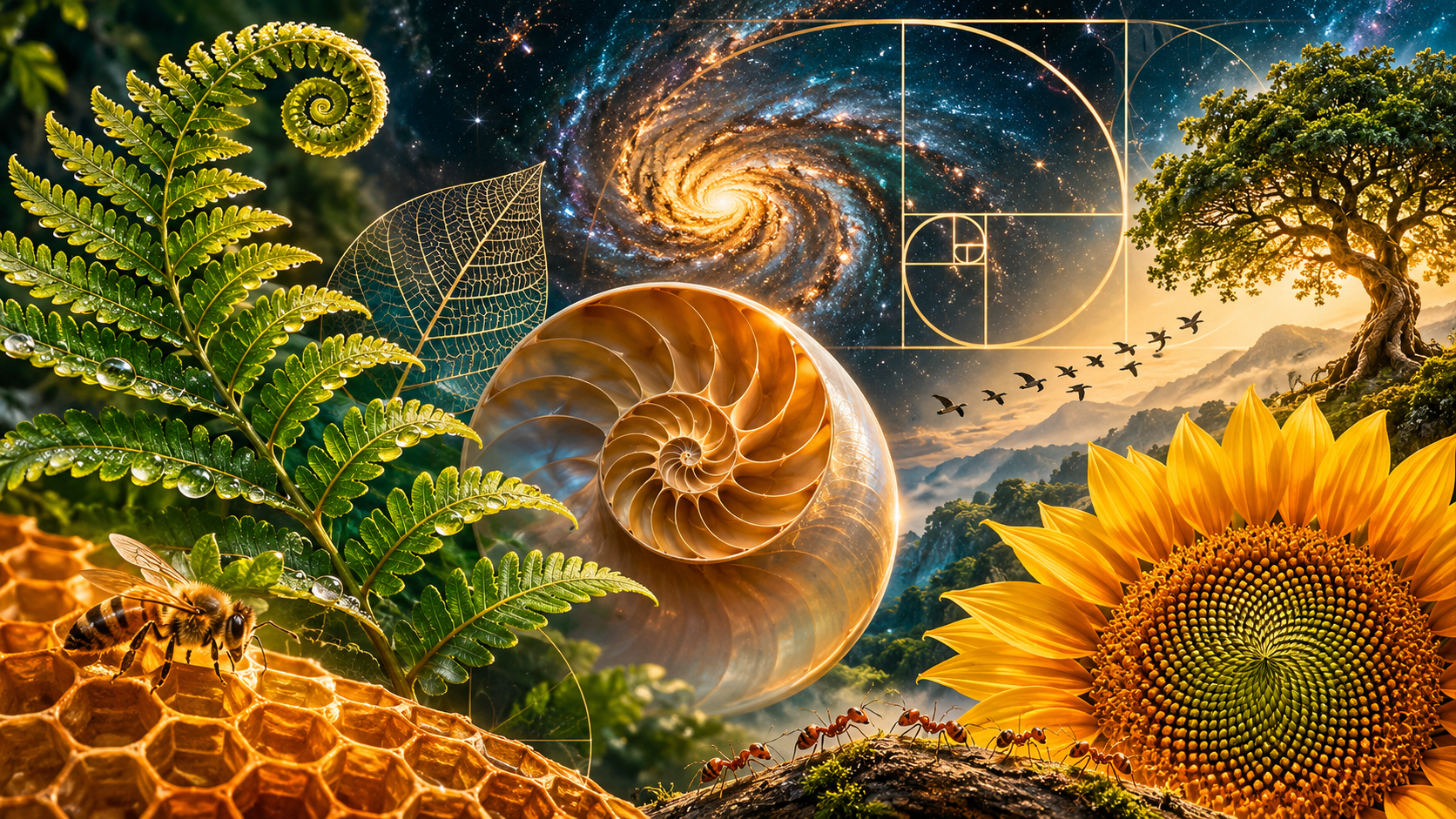
Discovering the extraordinary principles of order, intelligence, and self-organization in ...

Love is more than an emotion. It is a transformative force that awakens creativity, expands awareness, and shapes who we are becoming.

Is love more than an emotion? Explore love as a human way of recognising connection, creating meaning, and nurturing life through philosophy, nature, and art.

Explore the symbolic language of Persian art—from gardens and birds to miniature painting and geometric patterns—and discover how cultural meaning can inspire thoughtful contemporary design.

Explore love as an inner alchemy: a transformative force that deepens self-discovery, awakens compassion, and echoes through the mystical wisdom of Rumi.

A reflection on resilience, renewal, and the quiet courage of rising again after life's difficult chapters.