Before written language became the keeper of human memory, images were already telling stories. A bird could suggest freedom or the soul; a garden could become a portrait of paradise; a circle could evoke unity, continuity, and the order of the cosmos. Across civilizations, symbols have helped people express what ordinary words often struggle to contain: belonging, longing, faith, beauty, and the mysteries of being alive.
To understand symbolic art is to learn a different way of seeing. It asks us not only to notice what an image depicts, but also to consider what it carries. In Persian artistic traditions, this visual language developed through poetry, architecture, gardens, manuscripts, ceramics, textiles, and miniature painting. Its forms are decorative, yet rarely only decorative. Pattern, color, proportion, and motif can hold layers of cultural memory and meaning.
Why Human Beings Speak Through Symbols
A symbol gives visible form to an idea. It can make an abstract feeling tangible and allow a message to travel beyond the limits of a single language. A tree may stand for life and renewal; light may suggest knowledge or hope; a path may represent a journey of discovery. The meaning is not always fixed. It can change with time, place, faith, and the person who encounters it.
This openness is part of the power of symbolic art. A meaningful image does not simply deliver information. It invites participation. The viewer observes, remembers, interprets, and sometimes discovers a meaning that was not immediately apparent.
The Persian Garden: A World Within a World
Few cultural spaces express the meeting of nature, imagination, and philosophy as beautifully as the Persian garden. Its ordered pathways, flowing water, shade, trees, and flowers create more than a pleasant landscape. The garden can be read as an image of harmony: a carefully shaped relationship between human beings and the natural world.
Water suggests movement and renewal. Trees offer shelter and continuity. Flowers bring the brief intensity of beauty into view. The garden’s structure can also suggest balance and thoughtful order. In poetry and visual art, the garden becomes a place where the visible world opens toward an inner one.
Birds, Flowers, Light, and the Language of Motifs
In Persian poetry and art, birds often appear as figures of movement, yearning, freedom, or spiritual search. Their meaning depends on the story and context; no single interpretation explains every image. Flowers, meanwhile, can evoke beauty, fragility, renewal, and the passage of time. The rose and nightingale, for example, became an enduring poetic pairing through which writers explored love, desire, separation, and devotion.
Light is another powerful visual idea. In architecture and manuscript decoration, brightness, reflection, and luminous color can shape an atmosphere of wonder. Geometric patterns may suggest rhythm, continuity, and the possibility of finding order within complexity. These associations should not be treated as a universal code. They are invitations to read an artwork in relation to its history, setting, and artistic choices.
Persian Miniature Painting: Stories Inside Details
Persian miniature painting rewards patient attention. A scene may contain gardens, architecture, figures, animals, trees, and carefully arranged objects, each contributing to a larger narrative. Space is often organized in ways that differ from modern photographic perspective. Multiple moments or layers of a story may coexist within one composition.
Color, gesture, clothing, architecture, and landscape all help guide the eye. A small detail can carry emotional weight; a patterned surface can establish a sense of place; a tree or bird can echo the meaning of a poem. The miniature is not merely a small picture. It is a carefully composed world in which visual beauty and storytelling work together.
Geometry and the Beauty of Order
Geometric ornament is among the most recognizable features of many Iranian architectural and decorative traditions. Repetition, symmetry, interlacing lines, and star-like forms create visual rhythm. The patterns can be experienced first as beauty, then explored as systems of proportion and construction.
It is tempting to assign one fixed spiritual meaning to every geometric form, but responsible interpretation requires care. The design may reflect mathematical skill, workshop practice, architectural needs, aesthetic preference, and—in some settings—religious or philosophical ideas. Its richness lies partly in the way these dimensions can meet.
When Heritage Becomes Contemporary Design
Keeping a visual tradition alive does not mean copying historical objects without change. It means understanding the principles that give them character and translating those principles with respect. A contemporary designer might draw inspiration from the rhythm of a tile pattern, the balance of a garden, the movement of a bird, or the layered storytelling of a miniature—then reinterpret that inspiration through modern materials, proportions, and techniques.
The difference between meaningful inspiration and superficial decoration is knowledge. Researching a motif, understanding its context, crediting the tradition, and avoiding careless claims all help create work that feels considered rather than borrowed. The aim is not to turn heritage into a costume. It is to let its intelligence inform new forms.
Learning to See Beyond the Surface
The next time you encounter a patterned tile, an illuminated manuscript, a garden painting, or an ornament, pause before deciding that it is simply beautiful. Notice its structure. Ask what draws your eye, what repeats, what changes, and how the parts relate to one another. Consider the material, the maker, the place, and the time in which it was created.
There may be no single answer. That is not a failure of interpretation; it is part of the experience. Art can preserve memory while allowing each generation to ask new questions of it.
Art as a Bridge Between Memory and Imagination
Symbols allow cultures to carry ideas across generations, but they also give artists room to renew those ideas. Persian art offers a remarkable field for this kind of encounter: poetry and image, geometry and nature, craftsmanship and imagination. Its legacy is not confined to the past. It can continue wherever artists and makers approach it with curiosity, discipline, and respect.
When art speaks without words, it does not ask us to stop thinking. It asks us to look more closely. And sometimes, in the space between what we see and what we understand, a deeper story begins.
More than a pattern, a symbol can be a memory made visible—and an invitation to imagine what comes next.
Read this article in Persian: زبان نمادها؛ آنگاه که هنر بدون واژه سخن میگوید.
recent posts
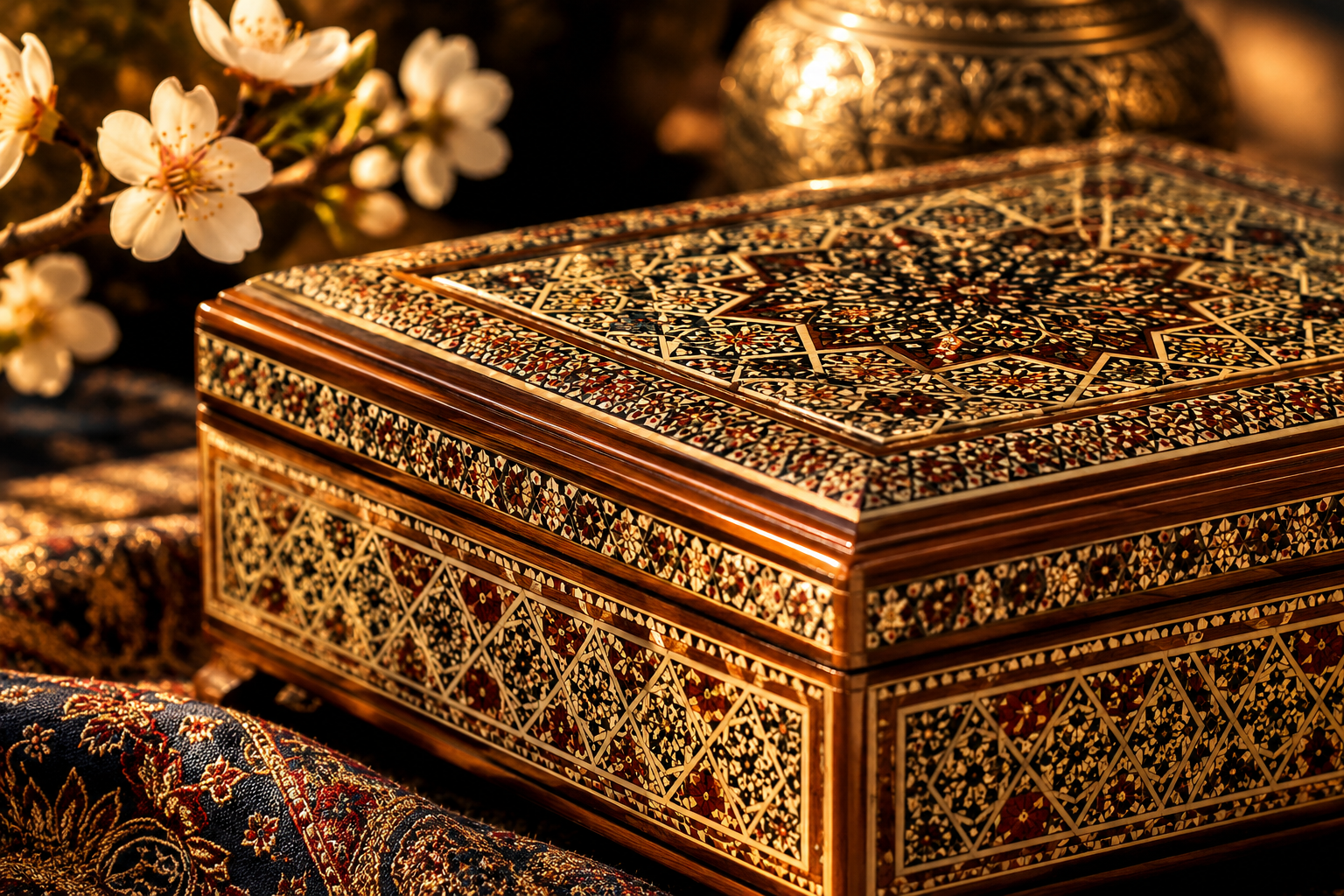
Discover khatamkari, the intricate Persian art of geometric inlay, where wood, bone, and metal become finely balanced patterns through patience, precision, and skilled craftsmanship.
What lies beyond the reality we perceive? Explore the hidden mysteries of the universe, the limits of human knowledge, and the endless journey of discovery.
Discover why patience is more than waiting—and how time, awareness, and quiet perseverance shape a meaningful life.
Discovering the extraordinary principles of order, intelligence, and self-organization in ...
Love is more than an emotion. It is a transformative force that awakens creativity, expands awareness, and shapes who we are becoming.
Is love more than an emotion? Explore love as a human way of recognising connection, creating meaning, and nurturing life through philosophy, nature, and art.
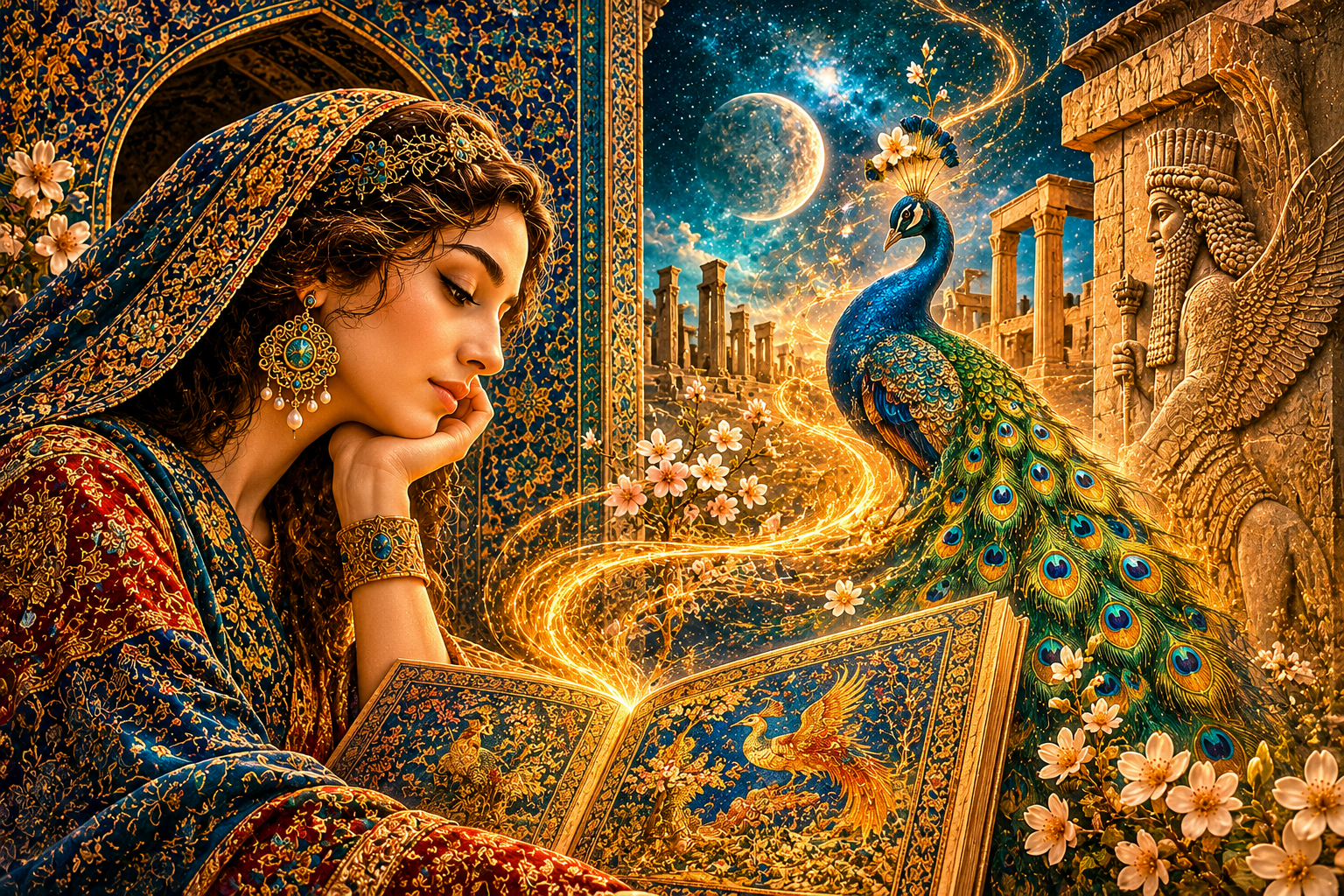
Explore the symbolic language of Persian art—from gardens and birds to miniature painting and geometric patterns—and discover how cultural meaning can inspire thoughtful contemporary design.
Explore love as an inner alchemy: a transformative force that deepens self-discovery, awakens compassion, and echoes through the mystical wisdom of Rumi.
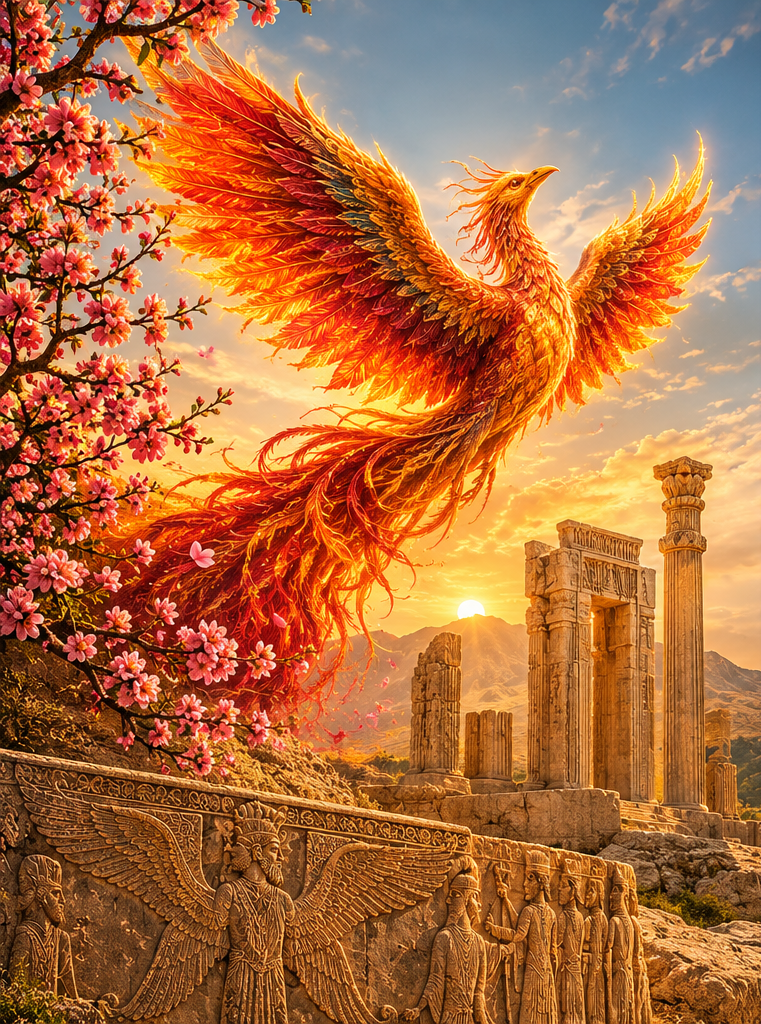
A reflection on resilience, renewal, and the quiet courage of rising again after life's difficult chapters.