
Beyond the absence of sound lies a hidden language — one that speaks through space, memory, art, and the deepest chambers of human awareness.
We live in a world that rarely stops speaking. Every moment is filled with voices, images, notifications, opinions, and endless attempts to be heard. Yet, somewhere beneath this constant movement, there is another dimension of existence — a place where meaning does not need to announce itself.
It is the world of silence.
Silence is often mistaken for emptiness, as though its only purpose were to provide a temporary escape from noise. But silence is not necessarily the absence of something. It can be the presence of something deeper: attention, awareness, contemplation, and the possibility of understanding what ordinary words cannot contain.
Perhaps silence is not an empty space. Perhaps it is an architecture of meaning.
1. The Space Between Words
Words are powerful. They allow us to communicate ideas, preserve memories, express emotions, and construct entire worlds through language. But every language has its limits.
Some experiences are too complex to be fully translated into sentences. Some emotions lose their depth when explained. Some truths become smaller when we attempt to define them too quickly.
Silence creates room for these experiences to exist without being reduced to explanations.
In music, the pause between two notes is not a mistake. It is part of the composition. Without pauses, melodies would become continuous streams of sound, losing much of their rhythm, tension, and emotional character.
The same principle can be found in human communication. Sometimes, a pause carries more sincerity than a carefully constructed sentence. Sometimes, listening becomes more meaningful than speaking.
Silence does not always interrupt communication. It can complete it.
2. The Architecture of Stillness
Architecture has always been more than the construction of walls, roofs, and spaces. At its finest, it shapes how human beings experience light, movement, proportion, and the relationship between the inner and outer worlds.
Consider the traditional Persian courtyard.
A central pool reflects the sky. Trees create measured shadows. The surrounding walls establish a sense of protection, while the open space above connects the courtyard to the vastness of the heavens.
Nothing needs to compete for attention.
Water, light, geometry, and space exist in a quiet relationship with one another. The result is not simply a beautiful environment; it is an invitation to experience stillness.
Persian gardens, with their carefully balanced elements, offer another expression of this idea. Their beauty is not based on abundance alone, but on harmony — on the thoughtful relationship between what is present and what is left open.
Perhaps this is one of architecture’s most profound lessons: meaningful spaces are not created only by what we add, but also by what we choose not to fill.
3. Silence as a Form of Awareness
Silence can change the way we perceive the world.
When external distractions become quieter, details that once seemed insignificant may become visible. The movement of light across a wall, the rhythm of breathing, the distant sound of water, or a thought that has remained unnoticed beneath the surface of everyday activity.
This does not mean that silence automatically brings wisdom. Nor does it mean that every unanswered question contains a hidden truth.
Rather, silence gives attention an opportunity to deepen.
In moments of stillness, we can examine our assumptions, recognize our emotional responses, and distinguish between what we genuinely understand and what we have simply repeated.
It is a space for intellectual honesty.
The ancient philosophical traditions understood, in different ways, the importance of contemplation. Across cultures, periods of reflection have provided a foundation for questioning, learning, and developing a more thoughtful relationship with existence.
Silence becomes meaningful not when it disconnects us from the world, but when it allows us to encounter the world more consciously.
4. The Beauty of What Is Unfinished
Art does not always reveal everything.
A painting may leave a portion of its story unresolved. A poem may end with an image rather than an explanation. A piece of music may disappear into a final note, leaving the listener suspended in an emotion that cannot easily be named.
This incompleteness is not necessarily a weakness. It allows the audience to participate.
When an artist explains every detail, the imagination has little room to move. But when something remains open, the viewer begins to create connections, remember personal experiences, and discover meanings that may not have been anticipated by the artist.
Silence, in this sense, is a creative instrument. It is the space in which the imagination becomes active.
The most enduring works of art often possess this quality. They do not exhaust their meaning in a single encounter. They remain open to interpretation, changing subtly as the observer changes.
5. The Difference Between Silence and Suppression
There is, however, an important distinction. Not every silence is beautiful.
Silence can also be imposed. It can emerge from fear, injustice, loneliness, or the inability to express what needs to be heard. There are moments when speaking is necessary, and remaining silent can protect the very conditions that should be challenged.
The silence explored here is not the silencing of human voices. It is chosen stillness — a conscious space for listening, reflection, and understanding.
True silence does not demand that we abandon our voices. It teaches us to recognize when our voices serve meaning and when they merely add to the noise.
6. Returning to the Essential
Perhaps the greatest value of silence lies in its ability to return us to what matters.
In a world that constantly measures visibility, productivity, and attention, we may begin to confuse being present with being noticed.
But existence is not always asking us to perform.
Some of its most meaningful experiences happen without an audience: a quiet morning, a moment of genuine understanding, the memory of someone we love, or the simple recognition that we are alive and aware.
These moments do not need to become content, achievements, or declarations. They are valuable simply because they are experienced.
Perhaps wisdom begins when we stop trying to fill every space. And perhaps beauty becomes more visible when we allow it room to breathe.
The Final Reflection
Silence is not the opposite of expression. It is one of its most subtle forms.
It lives between musical notes, within the geometry of ancient courtyards, beneath the surface of poetry, and in those rare moments when the mind becomes quiet enough to notice what has always been there.
We do not need to escape the world to discover silence. We need to learn how to meet the world without drowning in its noise.
For sometimes, what remains unspoken is not what is missing from the story. It is what gives the story its depth.
recent posts
From fractal patterns in nature to the formation of galaxies, the universe reveals structures that invite a profound question: how much order exists beneath what we perceive as chaos?
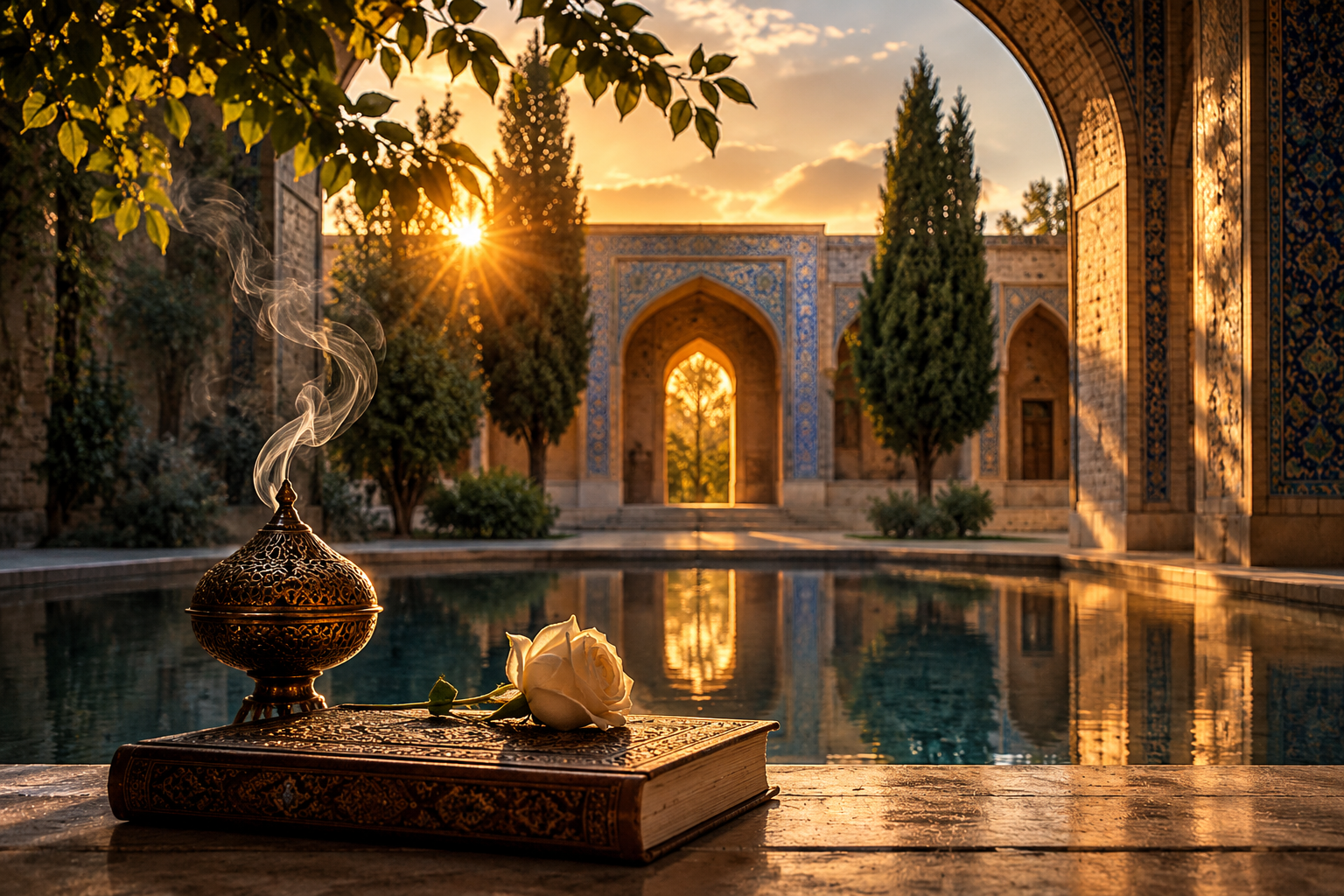
Beyond the absence of sound lies a hidden language. Explore silence through Persian architecture, philosophy, art, and human awareness.

Discover khatamkari, the intricate Persian art of geometric inlay, where wood, bone, and metal become finely balanced patterns through patience, precision, and skilled craftsmanship.
What lies beyond the reality we perceive? Explore the hidden mysteries of the universe, the limits of human knowledge, and the endless journey of discovery.
Discover why patience is more than waiting—and how time, awareness, and quiet perseverance shape a meaningful life.
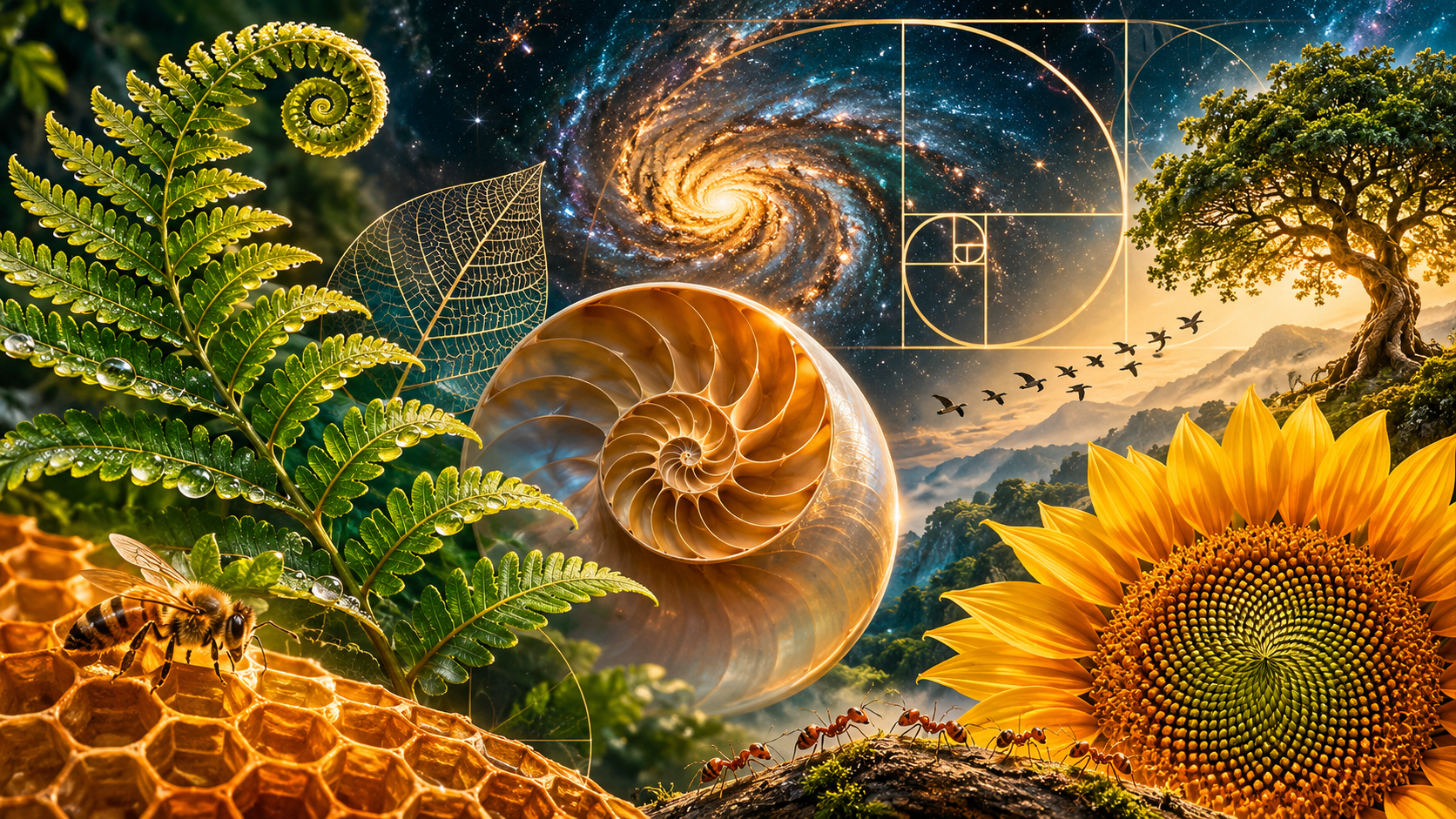
Discovering the extraordinary principles of order, intelligence, and self-organization in ...

Love is more than an emotion. It is a transformative force that awakens creativity, expands awareness, and shapes who we are becoming.

Is love more than an emotion? Explore love as a human way of recognising connection, creating meaning, and nurturing life through philosophy, nature, and art.
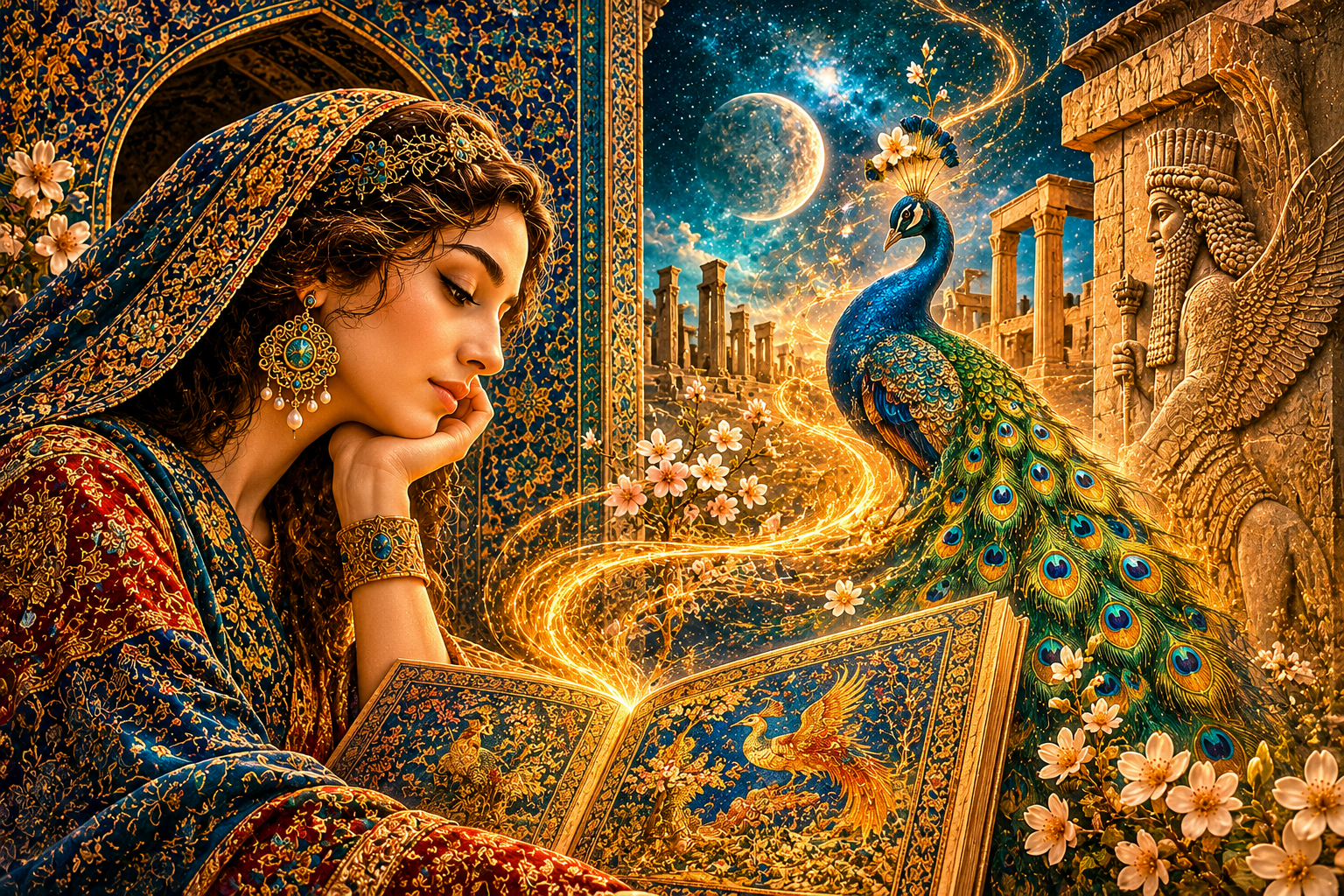
Explore the symbolic language of Persian art—from gardens and birds to miniature painting and geometric patterns—and discover how cultural meaning can inspire thoughtful contemporary design.